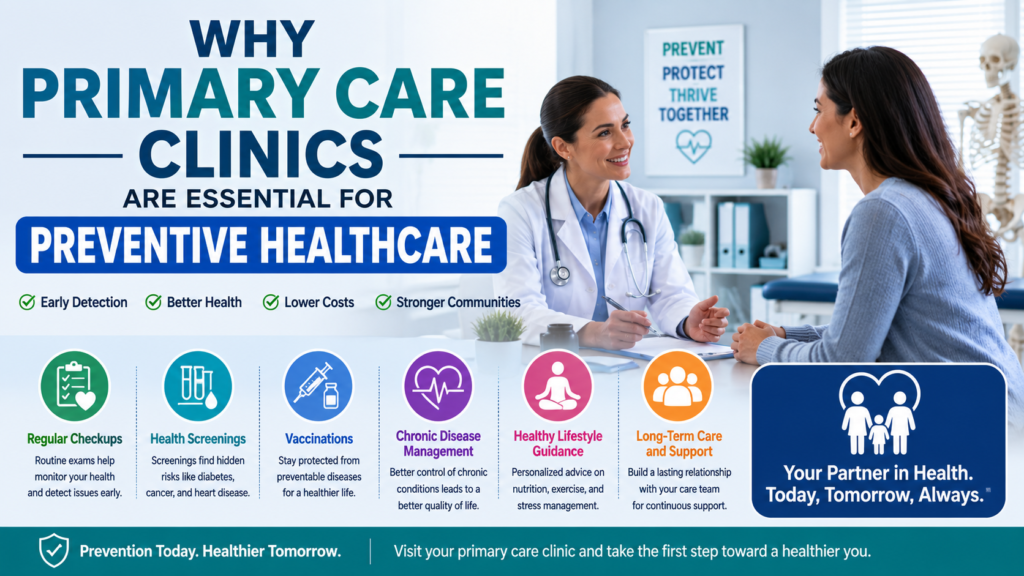

Primary care clinics play a very important role in keeping people healthy before serious illness develops. Many people visit a doctor only when they feel sick, but preventive healthcare focuses on stopping health problems early or reducing the risk of disease before symptoms become severe.
What Is a Primary Care Clinic?
A primary care clinic is a healthcare facility that provides basic and ongoing medical care for individuals and families. These clinics are usually managed by general physicians, family doctors, nurse practitioners, physician assistants, and other healthcare professionals.
Primary care clinics treat common illnesses, provide routine checkups, manage chronic diseases, offer vaccinations, and guide patients to specialists when needed. According to the World Health Organization, primary care supports health needs from promotion and disease prevention to treatment, rehabilitation, and palliative care.
What Is Preventive Healthcare?
Preventive healthcare means taking medical steps to prevent disease or detect it early. It includes regular checkups, screening tests, vaccines, health education, and lifestyle counseling.
The CDC explains that preventive care includes screenings to check for diseases early, vaccines to prevent illness, dental cleanings, and counseling that helps people make informed health decisions.
Instead of waiting until a disease becomes serious, preventive healthcare helps patients act early.
Early Detection of Health Problems
One of the biggest benefits of primary care clinics is early detection. Many serious diseases begin silently without obvious symptoms. High blood pressure, diabetes, kidney disease, heart disease, and some cancers may develop slowly over time.
Regular visits to a primary care clinic allow doctors to check important health indicators such as blood pressure, blood sugar, cholesterol levels, weight, and family history. If a problem is found early, treatment can begin before the condition becomes dangerous.
Early detection often leads to better treatment results, lower medical costs, and improved quality of life.
Regular Health Screenings
Primary care clinics help patients stay updated with important health screenings. These screenings may include blood pressure checks, diabetes tests, cholesterol tests, cancer screenings, eye exams, and routine blood work.
Screening needs may vary by age, gender, family history, and lifestyle. A primary care doctor can recommend the right tests at the right time.
Healthy People 2030 notes that screenings, dental checkups, and vaccinations are key to keeping people of all ages healthy, but many people miss preventive care because of cost, distance, lack of a primary care provider, or lack of awareness.
Vaccinations and Immunization Support
Vaccinations are an important part of preventive healthcare. Primary care clinics help patients stay protected against diseases such as flu, hepatitis, pneumonia, measles, tetanus, and other preventable infections.
For children, clinics help maintain vaccination schedules. For adults and seniors, clinics recommend booster shots and age-specific vaccines. This protects not only the individual but also the wider community.
Vaccination is one of the simplest and most effective ways to reduce disease risk.
Chronic Disease Prevention and Management
Primary care clinics are essential for preventing and managing chronic diseases. Conditions like diabetes, hypertension, asthma, thyroid problems, and heart disease need regular monitoring.
A primary care clinic can help patients track their health numbers, adjust medicines, improve diet, increase physical activity, and prevent complications. AHRQ describes disease prevention and helping people maximize health over the life span as essential parts of a well-functioning healthcare system.
By managing risk factors early, primary care clinics can reduce hospital visits and emergency care needs.
Personalized Health Advice
Every patient has different health needs. A teenager, a pregnant woman, a working adult, and a senior citizen all require different types of preventive care.
Primary care clinics provide personalized advice based on age, medical history, family background, lifestyle, occupation, and risk factors. Doctors may guide patients on nutrition, exercise, sleep, stress management, smoking cessation, alcohol reduction, and weight control.
This personalized support helps patients make realistic health changes.
Building a Long-Term Doctor-Patient Relationship
One major advantage of primary care clinics is continuity of care. When patients visit the same clinic regularly, the doctor becomes familiar with their health history, habits, allergies, past treatments, and family risks.
This long-term relationship helps doctors notice small changes in health more quickly. It also makes patients more comfortable discussing personal concerns such as mental health, lifestyle problems, or family medical history.
Trust between patients and doctors improves communication and leads to better healthcare decisions.
Mental Health Support
Preventive healthcare is not only about physical health. Primary care clinics also play an important role in identifying mental health concerns such as stress, anxiety, depression, sleep issues, and substance abuse.
Many patients first talk about emotional or mental health problems with their primary care doctor. The clinic can provide initial counseling, recommend lifestyle changes, prescribe treatment when appropriate, or refer patients to mental health specialists.
Early mental health support can prevent problems from becoming more serious.
Reducing Emergency Room Visits
Many emergency room visits happen because health problems were not managed early. Primary care clinics help reduce this risk by treating minor illnesses, monitoring chronic conditions, and providing timely medical advice.
For example, a patient with uncontrolled blood pressure can receive regular treatment at a clinic before it leads to stroke or heart complications. A diabetic patient can receive foot care, eye checkups, and blood sugar monitoring to prevent serious complications.
This reduces pressure on hospitals and helps patients avoid expensive emergency care.
Affordable and Accessible Care
Primary care clinics are usually more affordable and accessible than hospitals or specialist centers. They are often located within communities, making it easier for patients to visit for routine care.
Affordable access is important because preventive healthcare works best when patients receive regular care. When clinics are nearby and cost-effective, people are more likely to attend checkups and follow medical advice.
This makes primary care clinics especially valuable for families, seniors, and people with long-term health conditions.
Health Education and Lifestyle Counseling
Primary care clinics educate patients about healthy living. Doctors and healthcare staff can explain how diet, exercise, sleep, hydration, stress, and regular screening affect long-term health.
Health education helps patients understand their own role in disease prevention. Instead of only giving medicines, primary care clinics encourage healthier daily habits.
Simple lifestyle changes can lower the risk of obesity, diabetes, heart disease, and other chronic conditions.
Coordinating Specialist Care
Sometimes patients need advanced treatment from specialists such as cardiologists, endocrinologists, dermatologists, gynecologists, or neurologists. Primary care clinics help coordinate these referrals.
A primary care doctor can guide patients to the right specialist, share medical history, and continue follow-up care after specialist treatment. This prevents confusion and helps patients receive organized healthcare.
Primary Care for Families
Primary care clinics are helpful for the whole family. Children need growth monitoring, vaccines, and school health checks. Adults need lifestyle counseling, screenings, and reproductive health guidance. Seniors need chronic disease management, fall prevention, and medication review.
A family-focused primary care clinic can support every stage of life.
Conclusion
Primary care clinics are essential for preventive healthcare because they help patients stay healthy, detect diseases early, manage chronic conditions, and receive personalized medical advice. They provide regular screenings, vaccinations, lifestyle counseling, mental health support, and long-term care.
Preventive healthcare is not just about avoiding illness. It is about improving quality of life, reducing medical costs, and helping people live longer and healthier lives. By visiting a primary care clinic regularly, patients can take better control of their health and prevent small problems from becoming serious conditions.
Source
https://l1nq.com/cq2og8h
https://l1nq.com/e26gtur
FAQs
1. What is the role of a primary care clinic?
A primary care clinic provides routine checkups, treatment for common illnesses, preventive care, chronic disease management, vaccinations, and referrals to specialists.
2. Why is preventive healthcare important?
Preventive healthcare helps detect diseases early, reduce health risks, prevent complications, and improve long-term wellness.
3. How often should I visit a primary care clinic?
Many people benefit from at least one routine checkup each year, but the right frequency depends on age, health condition, family history, and doctor advice.
4. What services do primary care clinics offer?
They offer physical exams, screenings, vaccinations, basic treatment, health counseling, chronic disease care, mental health support, and specialist referrals.
5. Can primary care clinics help prevent chronic diseases?
Yes. They help monitor risk factors like blood pressure, blood sugar, cholesterol, weight, and lifestyle habits to prevent or manage chronic diseases.